
Where to put a dog cooling mat in the house

Tessa Larkin · Writer, pet wellbeing and pet gear
Tessa lives with a Labrador and two cats on the Texas Gulf Coast, one of the hottest and most humid corners of the country in summer. For several seasons she has been testing, in real conditions, what actually helps animals through the heat and what only looks like it does.
Your dog already picked the spot
Before you unroll anything, watch where your dog goes when the house warms up. Almost every household has the same short list: the hallway tile, the kitchen floor, the bathroom, the strip of bare floor by the back door, the shade under the dining table.
Those spots are not random. A dog gives off heat through the underside of the body, where the coat is thin and the skin meets the floor, and it goes looking for a surface that will take that heat. Hard, shaded, slightly drafty: that is the specification, worked out without being told.
So the instruction is the plain one. Put the mat on the spot they already chose, not in a corner that seems tidier to you. Nothing changes except that the floor now works better, which is why it gets used the same day.
If your dog is the cautious type about new objects, that is a separate question: getting your dog or cat used to a cooling mat walks through it day by day.
What goes underneath: tile, wood, carpet
The mat is built to move heat downward and outward: the top layer takes body heat up and spreads it, the breathable mesh underneath lets it go. The full mechanism, with the measurement we took, is on the page about how dog cooling mats work.
That gives one simple rule for placement: the more the underside is in contact with something hard, the faster the heat has somewhere to go.
Tile is the best case, and so is stone, vinyl, sealed concrete and a hard crate tray. Wood and laminate come next and are excellent in practice. These are also, conveniently, the surfaces your dog was already heading for.
Carpet and thick rugs are a different situation, and the answer is not to move rooms. A carpet insulates by design, so heat leaving the underside has less to move into. What fixes that is surface area: on a larger mat your dog shifts a few inches onto fabric they have not been lying on. It is the most concrete reason to take the bigger size when you hesitate, and the size guide gives the weight for each one.
On any floor, lay the mat flat: folded over on itself, half its underside presses against its own top layer instead of against the floor.
The one thing to leave off: the top
This is the single most common way a good spot gets wasted.
A cooling mat works by direct contact. Your dog lies down, the belly and the chest meet the fabric, and the heat goes into it. Anything laid on top sits in the middle of that exchange: a towel, a fleece throw, a blanket, a bed cover. The dog lies on the towel, the towel holds the heat, and the fabric underneath never does the one thing it is for. So leave the surface bare.
The instinct behind the towel is protection, pointed at the wrong layer. If you want to protect something, protect the floor: put the mat over the rug rather than a cloth over the mat. Hair and dust come off the surface with a damp cloth, so a cover saves you nothing.
The same applies below: a plastic sheet or rubber pad under the mat traps the heat just carried down, and a layer that breathes beats a sealed one.
In the bed, the basket and the crate
The answer is yes: the mat goes inside the bed, and it is one of the best places for it.
It helps to see what a dog bed is built to do. Padded with foam or polyester fiber, with a raised rim, it holds a body in a warm pocket: exactly right in cold weather and exactly backwards in warm weather. It is why a dog that sleeps in its bed all winter starts sleeping on the floor beside it when the house heats up. The bed stopped being cool, not comfortable.
Laying the mat over the base changes the surface without taking the bed away. Your dog keeps the sides they lean on and the smell they know, and gains a top that carries heat off instead of holding it in.
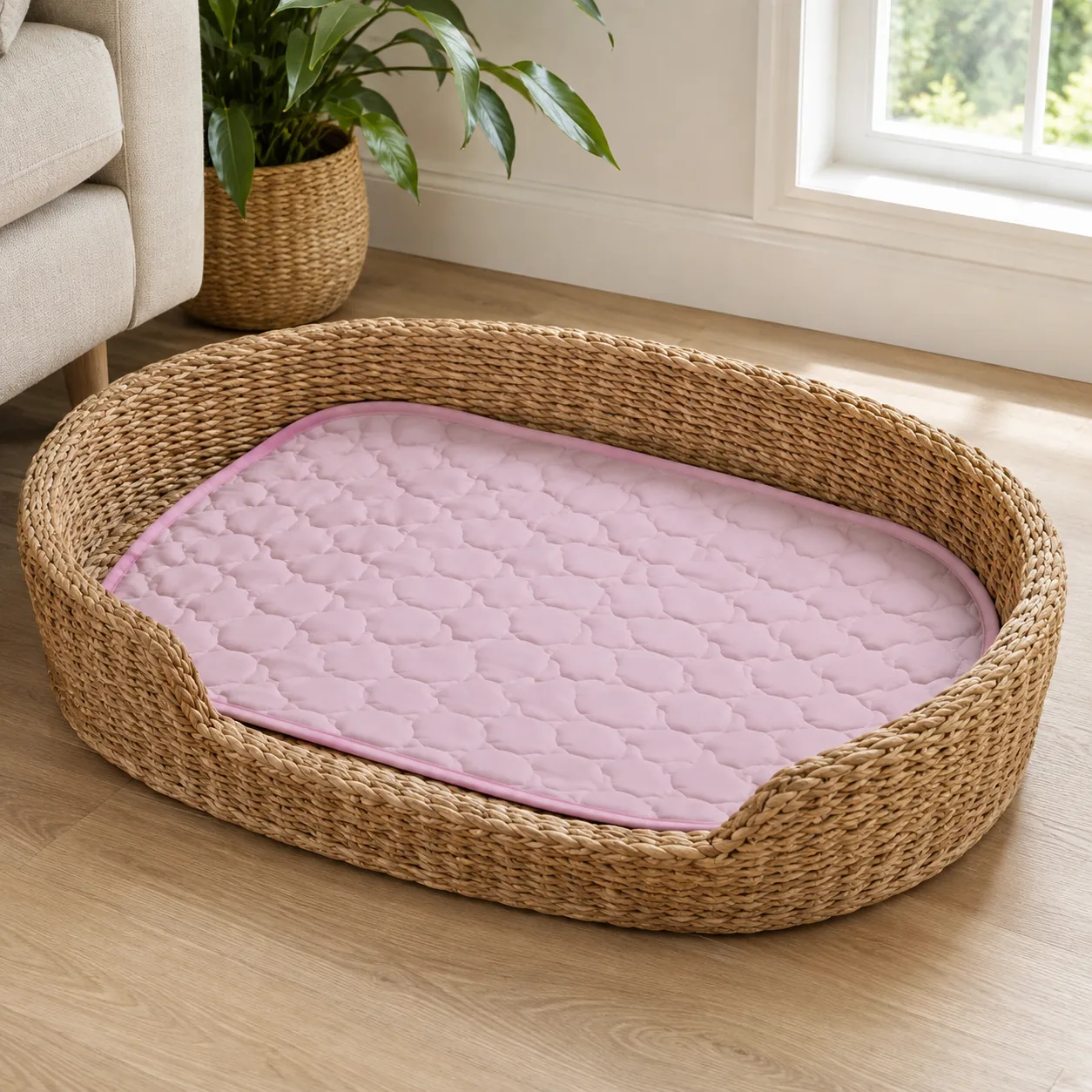
Measure the inside, not the outside. This is where sizing goes wrong most often: a bed advertised by its outer dimensions loses several inches on every side to the padded rim, so the usable base is smaller than the label suggests. Take a tape measure to the flat part, and prefer a mat that reaches the edges.
Crates and carriers are an easier case: the floor is a hard plastic tray, heat builds faster in an enclosed space, and the mat lies flat without sliding. If the crate travels with you, see using a cooling mat in the car and away from home.
On the couch, and on the bed you sleep in
Plenty of dogs do not sleep on the floor at all, and the mat follows them up.
Upholstery is warm for the same reason a dog bed is: padding wrapped in fabric, with nowhere to send heat downward. A cushion stays warm long after the dog has moved, which is the everyday proof of it. Laid flat on the seat, the mat carries that heat away instead of storing it.
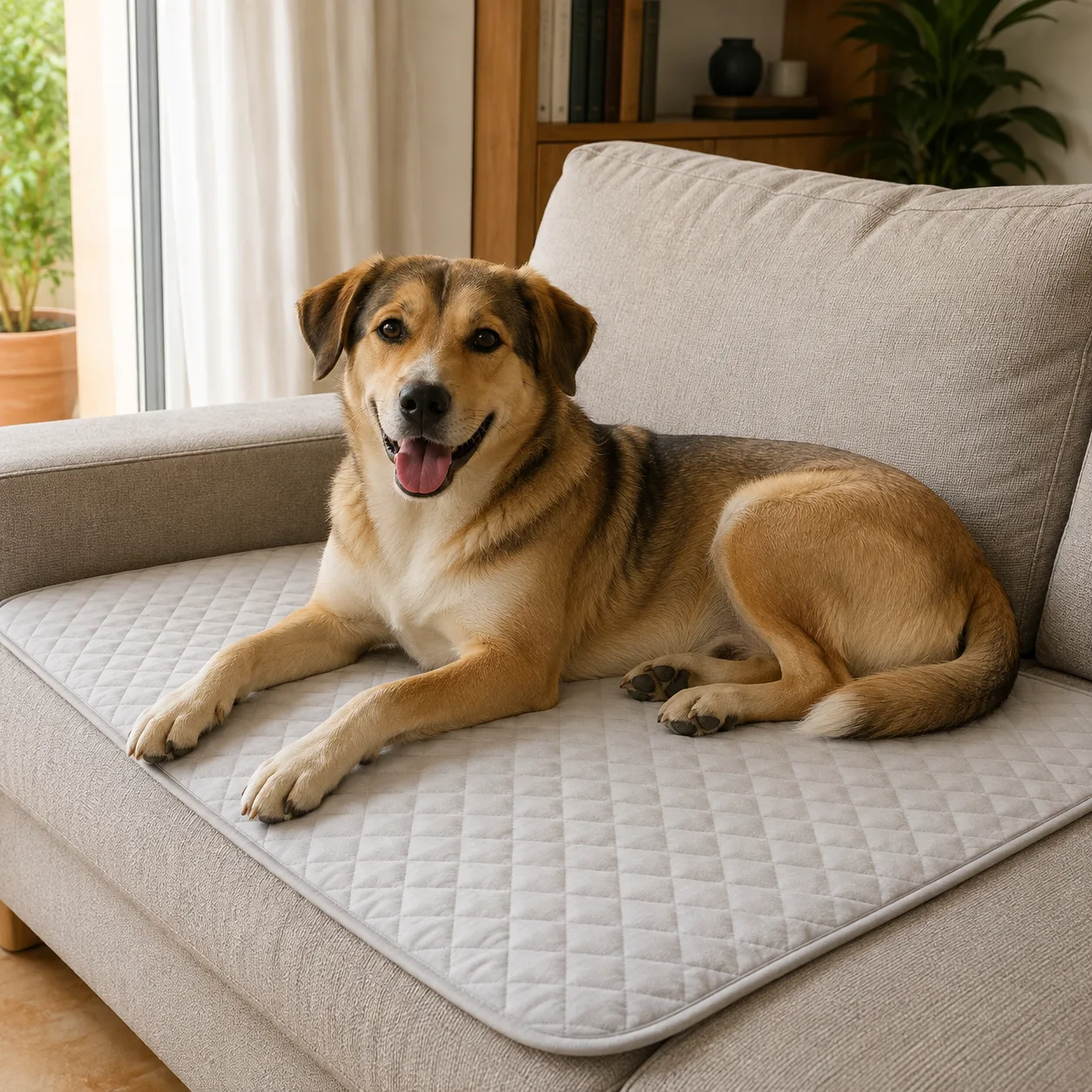
There is a second benefit owners tend to notice first: hair, paw dust and the marks a dog leaves on light upholstery land on the mat instead of on the couch. The mat wipes down and goes in the machine. The couch does not.
The same goes for your own bed if that is where your dog ends up at night, and for the armchair that has quietly become theirs.
Cats work differently, and it is worth knowing before you choose a spot for one: they pick fixed places and defend them, and the windowsill usually wins over anything you offer. The detail is on the cat cooling mat page.
Sun, glass and moving air
One more thing decides a good spot, and people forget it because it changes through the day: where the sunlight lands.
Direct sun through a window warms any surface it falls on, and a cooling mat is a surface. The awkward part is that the beam moves: a spot in shade when you set the mat down can be in full sun later, and a glazed door or a skylight is the usual culprit.
So pick the spot by watching the room, not by looking at it once. The reliable places are the same in most homes: the lowest floor in the house, a north-facing room, an interior hallway, or the floor near a door where air moves between two openings.
Moving air helps for a reason that is easy to miss: heat leaves the mat off its surface and through the mesh, and air passing over carries it away rather than letting it sit. A fan pointed across the room, not at your dog, does that.
The mat is one of several things that work together, and the rest of that list is in how to cool down a dog. If your dog is already in trouble, that is urgent and different: heatstroke in dogs covers what to do.
Why one spot is rarely the whole answer
Here is what happens once the mat has been down for a week. Your dog does not have one spot, they have a route: the living room while you are in it, the kitchen floor while you cook, the bedroom at night. Dogs organize their day around where the household is, and the coolest floor is only half the decision.
You can carry one mat around: it rolls up, it fastens, it weighs very little and it stands in a corner without taking up a shelf.
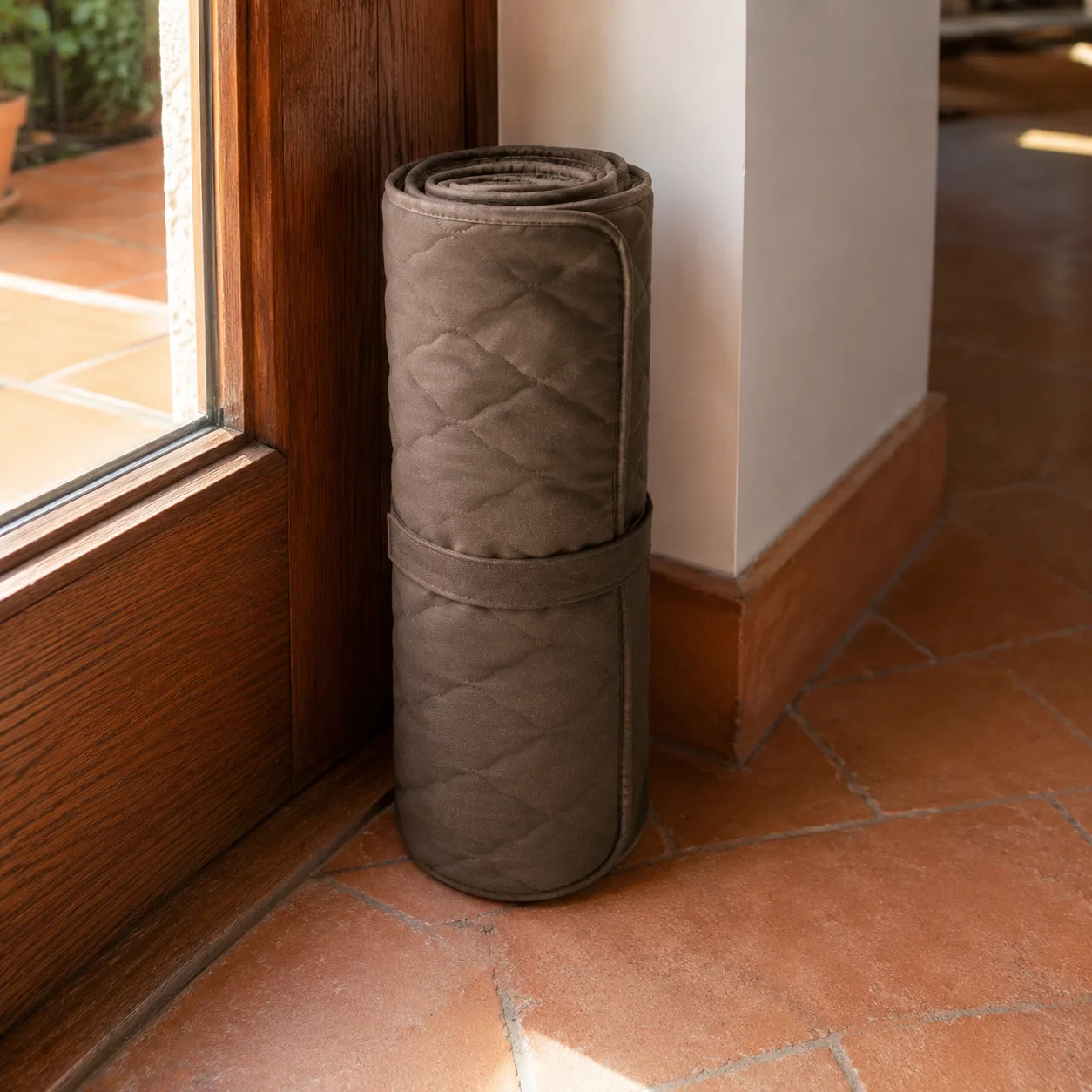
But the observation everyone makes in the end is that the mat which gets used is the one already there. Moving it means noticing your dog has moved, and by then they have settled somewhere else. Households with a mat in two or three places stop thinking about it entirely, which is the point.
That is what the set is for: pick two and the third comes with them, so the living room, the bedroom and the crate are each covered without anyone fetching anything. And if you have both a dog and a cat, you needed two anyway: they almost never agree to share a spot.
Two mats also means one can be in the wash while the other stays in service.
Frequently asked questions
Where is the best place to put a dog cooling mat?
Where your dog already chooses to lie down when the house gets warm: the hallway tile, the kitchen floor, the strip by the back door. Your dog surveyed the house before you did. Put the mat on that spot and it gets used the same day.
Can I put a cooling mat inside my dog’s bed?
Yes, and it is one of the places it does the most good. A stuffed bed is built to hold warmth in, which is the opposite of what your dog wants in warm weather. Laying the mat over the base gives them a surface that takes heat instead of one that keeps it. Measure the inside, not the outside: the padded rim can swallow several inches on every side.
Does a cooling mat work on carpet?
It does, and the answer is to give it more surface rather than a different room. Heat leaves faster when the underside sits against something hard, so tile, wood, vinyl and a crate tray are the easiest places. On carpet, a larger mat matters more, because your pet can shift a few inches onto a part they have not warmed up yet.
Should I put a blanket or a cover over the mat?
No, leave the surface bare. The mat works by direct contact, so anything laid over it, a towel, a fleece throw, a bed cover, sits between the two and the heat never reaches the fabric. If you want to protect something, protect the floor underneath.
Can I put a cooling mat on the couch?
Yes. Upholstery stores heat and has nowhere to release it downward, which is why a cushion stays warm long after your dog gets up. A mat laid flat on the seat carries that heat away instead, and keeps hair off the fabric at the same time.
How the cooling behaves once your pet settles in one place is covered in how long the cooling really lasts. This text does not replace veterinary advice.
One mat per room your dog actually uses
Ice silk with no gel, no water and nothing to put in the freezer. Four sizes, four colors, and 30-day returns.
Free shipping to 18 countries · 30-day returns · We reply within 24 hours