
Which dog breeds struggle most in the heat?

Tessa Larkin · Writer, pet wellbeing and pet gear
Tessa lives with a Labrador and two cats on the Texas Gulf Coast, one of the hottest and most humid corners of the country in summer. For several seasons she has been testing, in real conditions, what actually helps animals through the heat and what only looks like it does.
The first trait: the muzzle
A dog does not sweat. The few sweat glands it has are in the paw pads and make almost no difference. All of its temperature regulation runs through panting: it breathes fast and shallow, moisture evaporates from the tongue and airways, and that takes heat out of the body.
In a brachycephalic dog, meaning one with a shortened muzzle, that very route works badly. The airways are compressed, the nostrils often narrow, and it has to do far more muscular work for the same amount of air. That work produces heat of its own. So it pants more and gets less out of it.
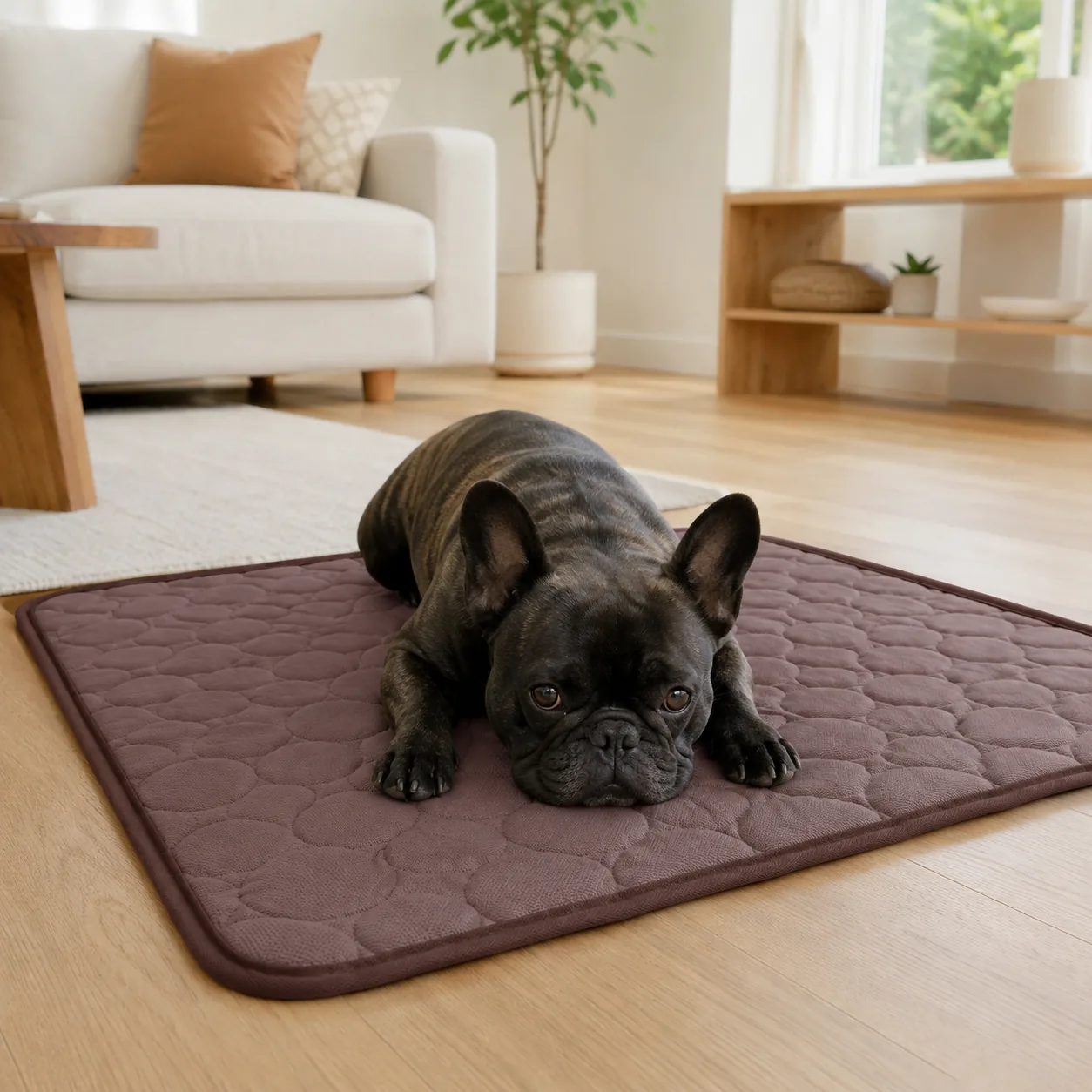
For a French Bulldog a cool surface is not a comfort item: it is the main route left, because it can give off heat through the belly side, where the coat is thin and the skin touches the floor.
The second trait: the coat
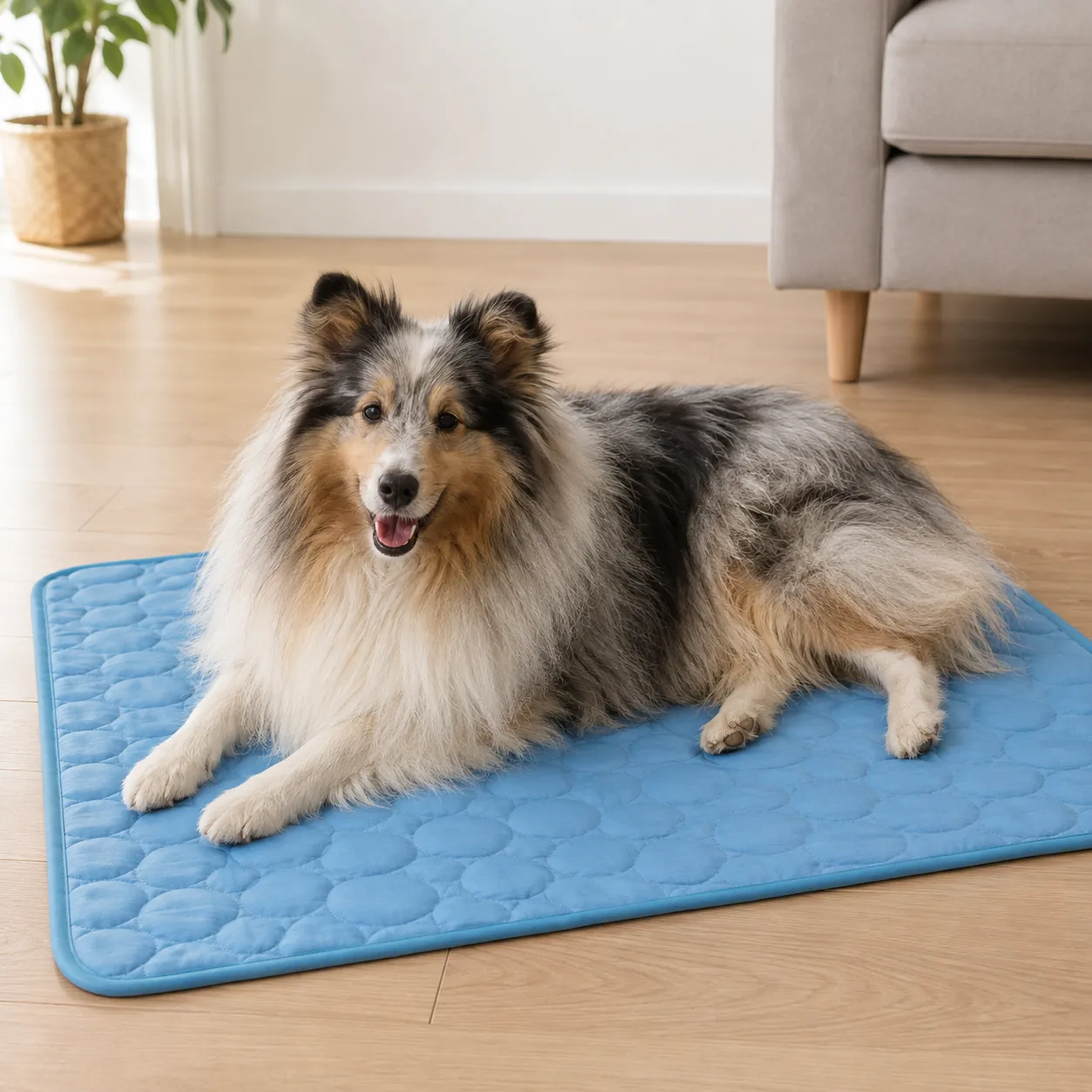
This is where the reasoning usually goes wrong. It is not length that decides, it is the density of the undercoat. A German Shepherd does not have a particularly long coat, but it has a very dense undercoat that works as an insulating layer. A Greyhound, with a short thin coat, handles heat far better than a Bernese Mountain Dog does.
It is the same reason the British Shorthair sits high on the cat list despite the short coat: its undercoat is exceptionally dense.
What helps is brushing, not shaving. Taking out the dead undercoat lowers the insulation without removing the protection. Shaving a double-coated breed takes away the layer that protects against outside heat and sunburn too.
The third trait: body mass
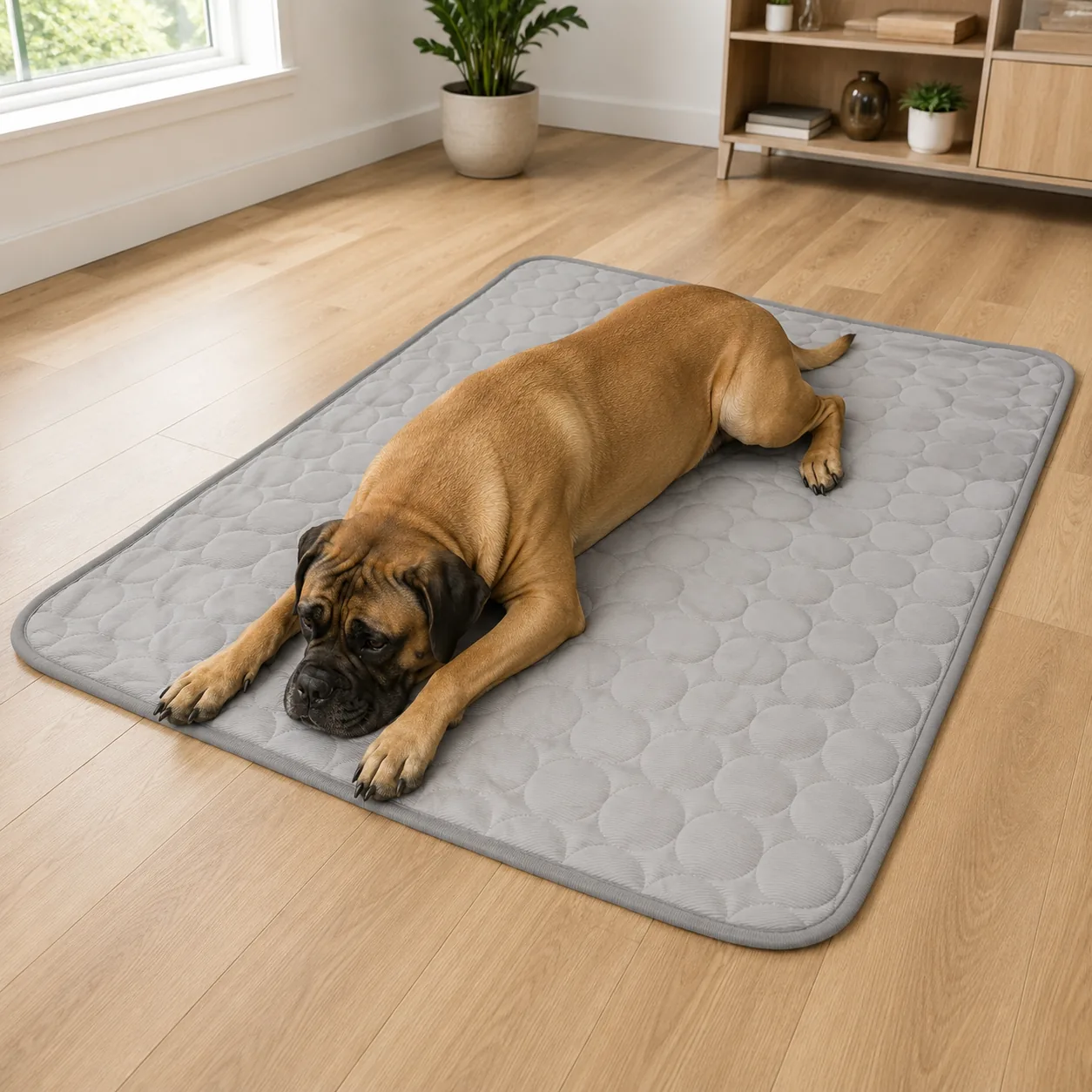
A large body produces more heat and has, proportionally, less surface area to get rid of it through. That is why a Rottweiler, a Bernese Mountain Dog or a Mastiff has a harder time than a Jack Russell.
The factor that weighs most in practice, and appears in no breed table anywhere, is being overweight. Fat tissue insulates, and an overweight dog is also moving more mass with every step. A Labrador carrying too much is in more trouble in summer than a lean German Shepherd.
The ten most registered breeds in the US, by level of risk
On the 2025 registration figures the top four are the French Bulldog, the Labrador Retriever, the Golden Retriever and the German Shepherd Dog. All four are in one of the two risk categories: one is short-muzzled, three are double-coated.
| Breed | Note | Risk | Why |
|---|---|---|---|
| French Bulldog | #1 in the US | very high | Short muzzle: panting is severely limited |
| Bulldog | #10 in the US | very high | Short muzzle, heavy build, often overweight |
| German Shepherd Dog | #4 in the US | high | Dense undercoat that insulates in summer |
| Golden Retriever | #3 in the US | high | Long, dense coat |
| Rottweiler | #8 in the US | high | Large body mass, dark coat |
| Labrador Retriever | #2 in the US | medium | Dense outer coat, tends to put on weight |
| Dachshund | #5 in the US | medium | Long back, close to the ground, little air under the belly |
| Poodle | #6 in the US | medium | Depends heavily on clip and on variety |
| German Shorthaired Pointer | #9 in the US | low | Short coat, but a very active dog |
| Beagle | #7 in the US | low | Short coat, moderate size |
And for cats
Cats handle heat better than dogs, since their ancestors lived in dry regions. Two groups are the exception, and it is a matter of anatomy.
| Breed | Risk | Why |
|---|---|---|
| Persian | very high | Long coat and a flat face together |
| Maine Coon | high | Dense semi-long coat, the largest domestic cat |
| Norwegian Forest Cat | high | Dense winter coat, bred for the cold |
| British Shorthair | medium-high | Very dense undercoat despite the short coat |
| Domestic Shorthair | low-medium | Short coat, good self-regulation |
The Persian stacks both risk factors, long coat and flat face. That makes it the most exposed domestic cat there is. How cats show heat strain and what helps is on the pages about signs your cat is overheating and how to cool down a cat.
What changes in practice
With an animal from the top rows, everything moves a little earlier. Walks sooner and shorter. Attention from 77 °F rather than 86 °F. And a bigger surface to lie on, because an animal that sheds heat badly through breathing needs that much more contact area.
That is why, when you are unsure, the next size up is the one to take: not because a big mat cools more, but because an animal that can shift always finds a spot that has not warmed up yet. Why the effect drops in one particular place is explained in how long a cooling mat lasts.
Frequently asked questions
Why do short-muzzled dogs cope so badly with heat?
Because a dog regulates temperature almost entirely by panting: moisture evaporates from the tongue and airways and carries heat away. A brachycephalic dog like a French Bulldog has shortened airways and often narrow nostrils, so it has to do far more work for the same amount of air, and that work produces heat of its own. It pants more and gets less out of it.
Should I shave my long-haired dog in summer?
With double-coated breeds like the German Shepherd, the Husky or the Australian Shepherd, usually not. The coat insulates in both directions and protects the skin from burning, so shaved dogs often do worse rather than better. What genuinely helps is brushing the dead undercoat out thoroughly. With a badly matted coat, leave the decision to experienced hands.
Do black dogs suffer more?
In the sun, yes, a dark coat absorbs more radiant heat. In the shade or indoors the color makes almost no difference: there it is coat density, muzzle length and body mass that count.
My mixed breed is none of these, what applies to him?
The mixed breed is the most common dog in American homes, and the same three traits apply to him: how long the muzzle is, how dense the coat is, how much he weighs. Anyone who looks at those three knows more than any breed table can tell them.
Is a cooling mat more useful for these breeds?
It changes more for them, because they have fewer alternatives. A dog that pants badly depends far more on giving off heat through the underside of the body, and that is exactly what a cool surface to lie on is for. The mat does not replace shade, water, or a vet if heatstroke sets in.
Registration figures: American Kennel Club, 2025 data. This text does not replace veterinary advice.
More surface for the ones that need it
Four sizes up to 59 x 39.4 in. For short-muzzled and long-coated pets, one size up is the safer call.
Free shipping to 18 countries · 30-day returns · We reply within 24 hours