
How to cool down a dog: 9 things that actually work

Tessa Larkin · Writer, pet wellbeing and pet gear
Tessa lives with a Labrador and two cats on the Texas Gulf Coast, one of the hottest and most humid corners of the country in summer. For several seasons she has been testing, in real conditions, what actually helps animals through the heat and what only looks like it does.
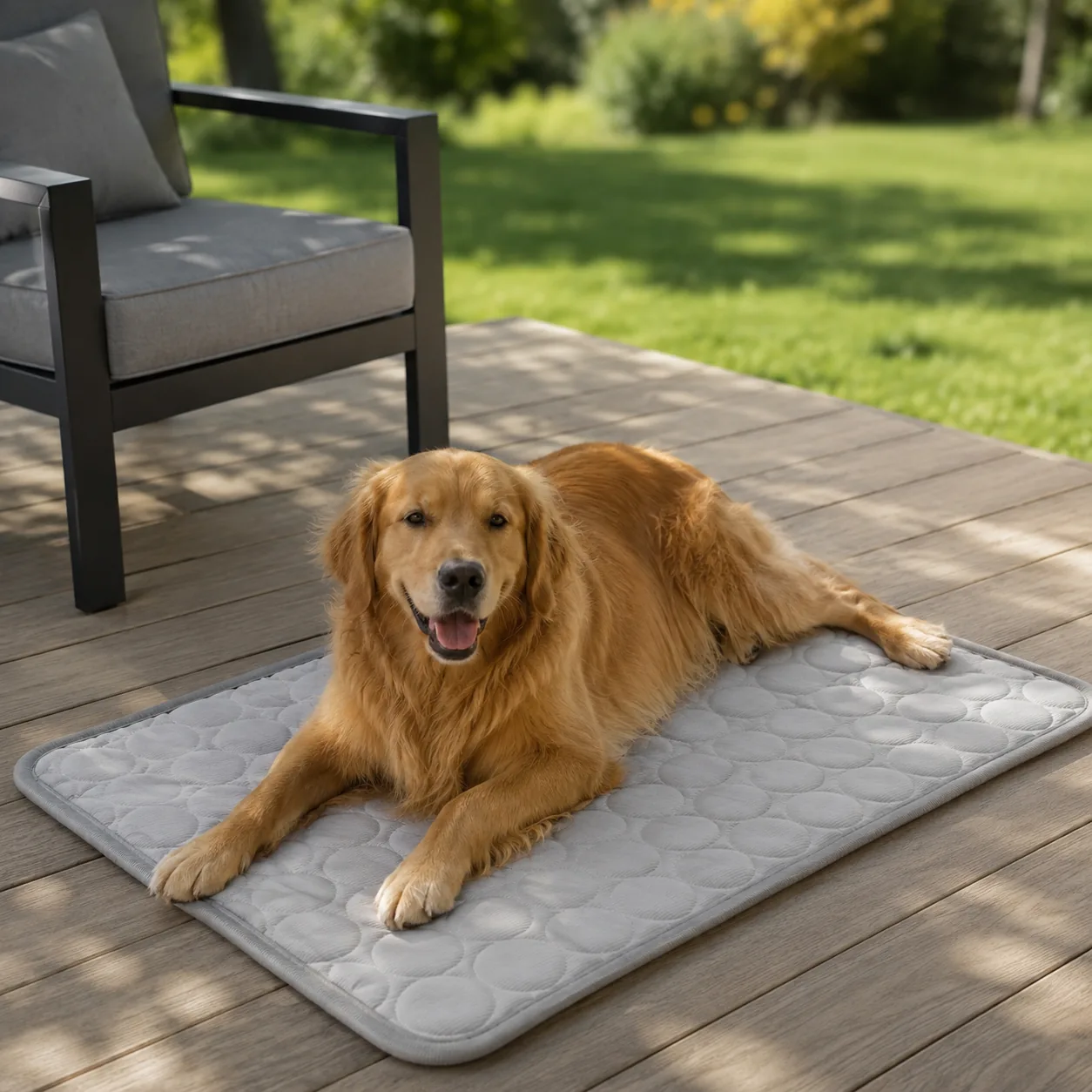
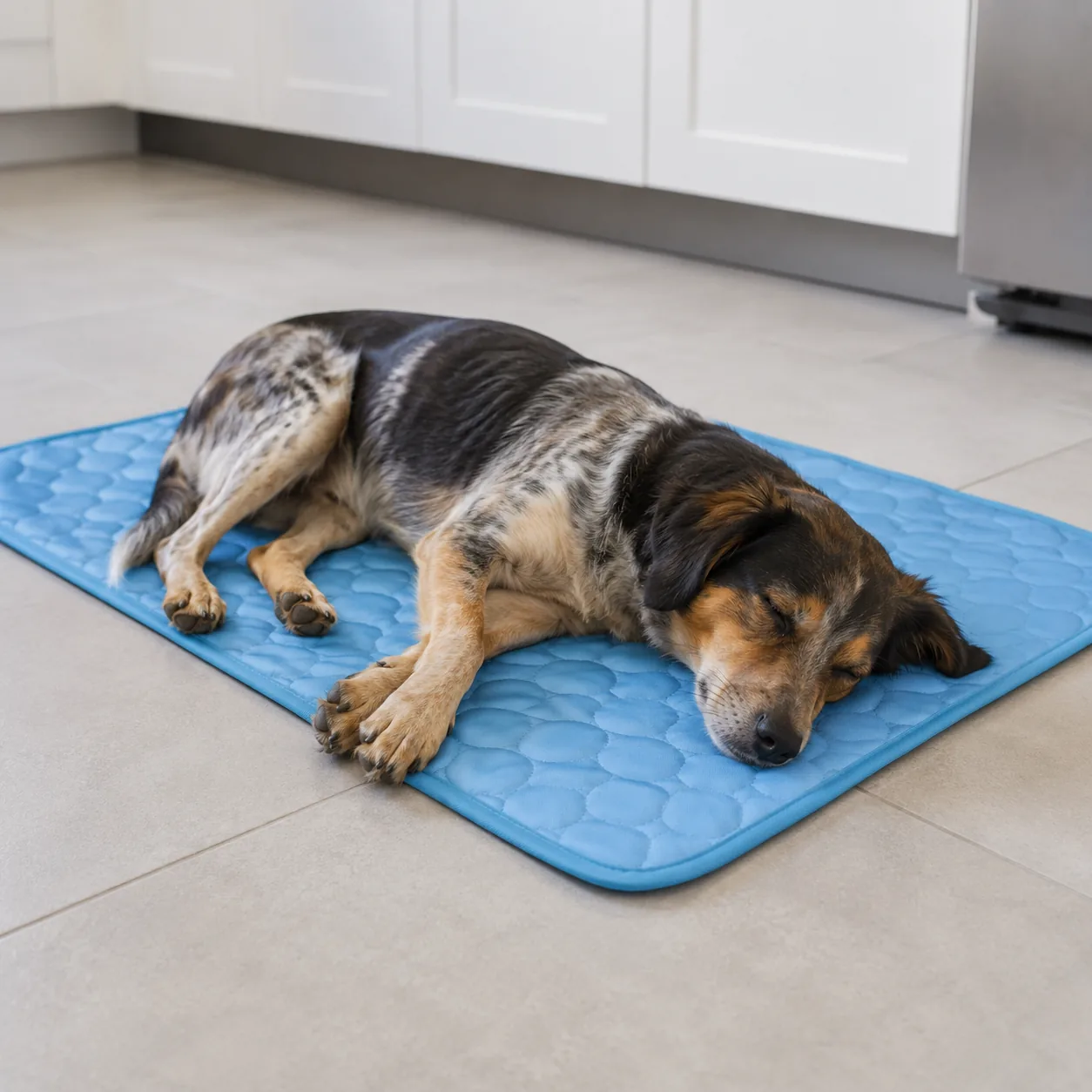
1. A cool surface to lie on
Watch where your dog lies down by themselves in summer: the hallway tile, the bathroom, the basement steps. They are not looking for cold, they are looking for a surface that will absorb their heat, because the underside of the body, where the coat is thin, is where they can shed it.
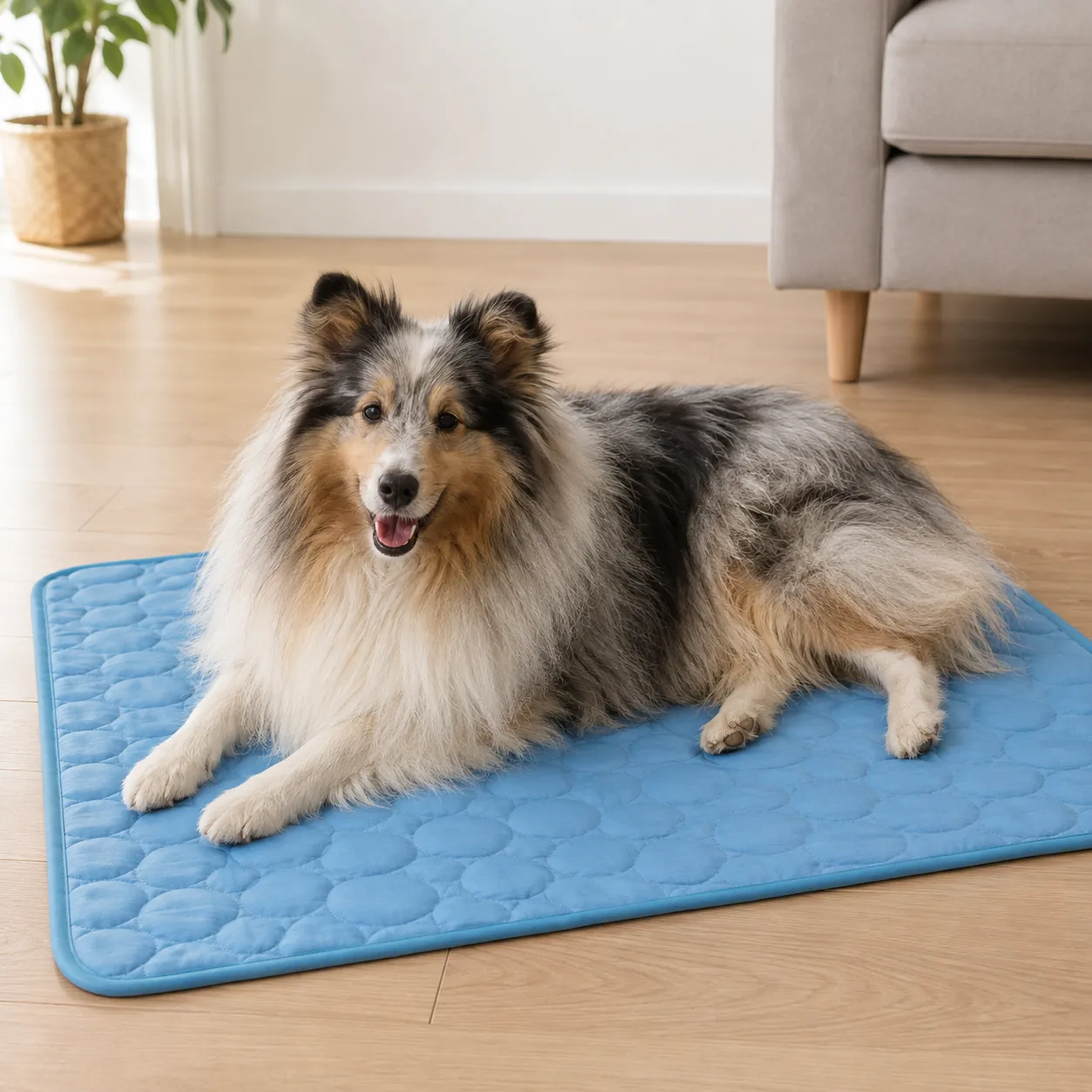
That is exactly what a cooling mat does, in a spot you choose, and one you can take in the car or on a trip. The physics is on the page about how cooling mats work, with the measurement: 89 °F on the bare floor against 78 °F on the mat, same room.
It is also the point where you can act over the greatest number of hours: a dog sleeps between twelve and sixteen hours a day, and every hour spent on a surface that takes heat away is an hour of less work for their own cooling.
A cooling figure only means something once you know what it was measured against. "Cooler than the surrounding area" can mean the floor, the air, or nothing in particular. Ours was measured against the bare floor in the same room, and both readings are published.
2. Shade that is still there at noon
A spot that is shaded in the morning can be in full sun by the afternoon. If your dog is outside, check that spot once around midday. A parasol you can move, or a shade sail, solves the problem at minimal cost, and the mat goes there, not in the sun.
3. Moving air
A fan circulating the room air helps more than one pointed at the dog. In a dog the effect works mainly through evaporation while panting, and that works better when the humid air is carried away. Airing out early and then shading the windows is the routine that keeps an apartment cool.
4. Water in several places, and not ice cold
Two or three bowls, outside and in the car too. Water at room temperature or barely cool gets drunk more readily than ice-cold water. For long outings, a collapsible bowl in the pack.
5. Walks at the right hour
Before seven in the morning and after eight in the evening, and at midday only what is strictly necessary. A dog walking for an hour at noon in 90 °F is producing heat through movement as well, on top of what is coming in from outside.
Check the ground with the back of your hand, five seconds. At 86 °F air temperature asphalt can pass 120 °F, and it gives that heat back late into the evening. Grass, packed earth and shaded streets are not just pleasanter in summer: they are markedly cooler.
6. A wet towel, used the right way
A damp cloth under the dog, or laid loosely over the back and neck, helps. Wrapping them in it does not: it insulates, and the heat stays underneath. Change the cloth as soon as it has warmed up, or it turns from cooling into a blanket.
7. Groom the coat instead of shaving it
Dead undercoat works as an insulating layer, so brushing thoroughly does a lot in summer. Shaving, in double-coated breeds like the German Shepherd, the Husky or the Australian Shepherd, is usually counterproductive: the coat also protects against outside heat and sunburn. Thin it rather than shorten it, and if in doubt talk to your groomer.
8. A shallow pool, if your dog will get in
This only applies to dogs that go into water willingly, and it is tied to one spot in the yard: it covers the minutes the dog is in it, and no more. The water should not be freezing, and afterwards dry them or let them air dry, so heat does not build up under a wet coat.
Forcing it achieves nothing: a dog that avoids water has its reasons, and stress produces extra heat. For all the other hours, they still need a cool place to lie down.
9. Combine cooling with activity
Frozen snacks, a stuffable toy put in the freezer, cold wet food to lick: they cool a little from the inside and keep a dog busy on the days when the long walk gets skipped. Without overdoing it: very cold food in large amounts can be hard on the stomach.
Are ice cubes bad for dogs? Not the ones they crunch
The RSPCA lists "ice cubes are dangerous" among the heatwave myths it debunks, and its wording is precise: offering ice cubes or frozen treats for your dog to eat in hot weather can be safe when done correctly. Crunching or licking small amounts, or dropping a few into the water bowl, is an ordinary hot-weather refreshment. Two conditions come with it. Stay in the room while your dog has them, and give a piece your dog has to chew rather than one that goes down whole, because choking is the actual risk. A dog that swallows everything at speed gets theirs floating in the bowl, where they melt, or as something frozen to lick.
And here is the distinction that keeps getting lost: a dog crunching an ice cube is not a dog you are pouring ice water over or lowering into an ice bath. One is a mouthful. The other chills the whole skin surface at once, the blood vessels in the skin narrow, and less heat leaves the body at the moment it most needs to. That is why the page on heatstroke in dogs says no ice: it is about ice put on the outside of a dog in an emergency, and it was never about the cube your dog is chewing on the kitchen floor.
None of it changes point 4 above. Bowls at room temperature or barely cool still get emptied more readily than ice-cold ones, so cubes are a treat and a nudge to drink, not how the day's water gets served. And a cube cools for as long as it lasts. The rest of the day is still shade, moving air and a cool surface to lie on.
And the one thing that is never negotiable
What to do if it happens anyway is in the article on heatstroke in dogs. For cats a lot of this works differently, and that is explained in signs your cat is overheating.
Frequently asked questions
How do I cool my dog down as fast as possible?
Get them out of the sun, then water on the paws and legs, the belly and inner thighs, with moving air from a fan. The RSPCA advises using whatever water you have readily available, as long as it is cooler than your dog, instead of losing time over the temperature, and cooling first and driving to the vet second. Bottom up, and not ice cold: a 2023 study in Veterinary Sciences records dogs dying on immersion in ice-cold water, through the vasoconstriction it triggers.
Can my dog go in the pool or a kiddie pool?
Yes, if they get in willingly and the water is not freezing: let them decide how long to stay. Afterwards dry them off or let them air dry, so heat does not build up under a wet coat. A pool only covers the minutes spent in the water, though. For the rest of the day they still need a cool place to lie down.
Are ice cubes bad for dogs?
No, not as something to eat. The RSPCA lists that among its heatwave myths: ice cubes or frozen treats can be safe when done correctly, meaning you stay with your dog and give a piece they have to chew rather than swallow whole. What the ice warning is really about is ice applied to the outside of an overheating dog, which is a different thing entirely.
When is asphalt too hot for paws?
Put the back of your hand on the ground for five seconds. If you cannot stand it, neither can your dog. At 86 °F air temperature, asphalt can pass 120 °F, and it holds that heat well into the evening.
Does shaving help against the heat?
For most dogs no, and for some it does harm. Double-coated breeds like the German Shepherd, the Husky or the Australian Shepherd have a coat that also protects against outside heat and sunburn. What helps is brushing thoroughly to get the dead undercoat out: thin it rather than shave it, and when in doubt ask your groomer.
This text does not replace veterinary advice.
The Frimouf Ice cooling mat
Ice silk with no gel, no power and nothing to put in the freezer. Four sizes from 19.7 × 15.7 in to 59 × 39.4 in, four colors, from $39.99.
Free shipping to 18 countries · 30-day returns · We reply within 24 hours