
Getting your dog or cat used to a cooling mat

Tessa Larkin · Writer, pet wellbeing and pet gear
Tessa lives with a Labrador and two cats on the Texas Gulf Coast, one of the hottest and most humid corners of the country in summer. For several seasons she has been testing, in real conditions, what actually helps animals through the heat and what only looks like it does.
Why a new object gets studied before it gets used
For a pet, the house is a territory with a precise map: where you sleep, where you eat, where you watch the outside from. Something that appears on that map gets sniffed first, then touched, then used, in that order. It is normal behaviour and it says nothing about the object itself.
The first channel is smell, and a fabric just out of its packaging smells of the packaging. Which is why a few hours in the open air, before you even offer it, already does half the work.
The second channel is touch. The ice silk surface feels immediately cool under a paw, because it conducts heat away faster than ordinary fabric. The physics is on the page about how cooling mats work. Some animals stretch out on it straight away, others test it with one paw first. Both reactions are normal.
The path, day by day
| When | What to do | Why |
|---|---|---|
| First hour | Take the packaging off and leave the mat spread out in the open air, even outside your pet’s room | The packaging smell goes, and that is the first thing they notice |
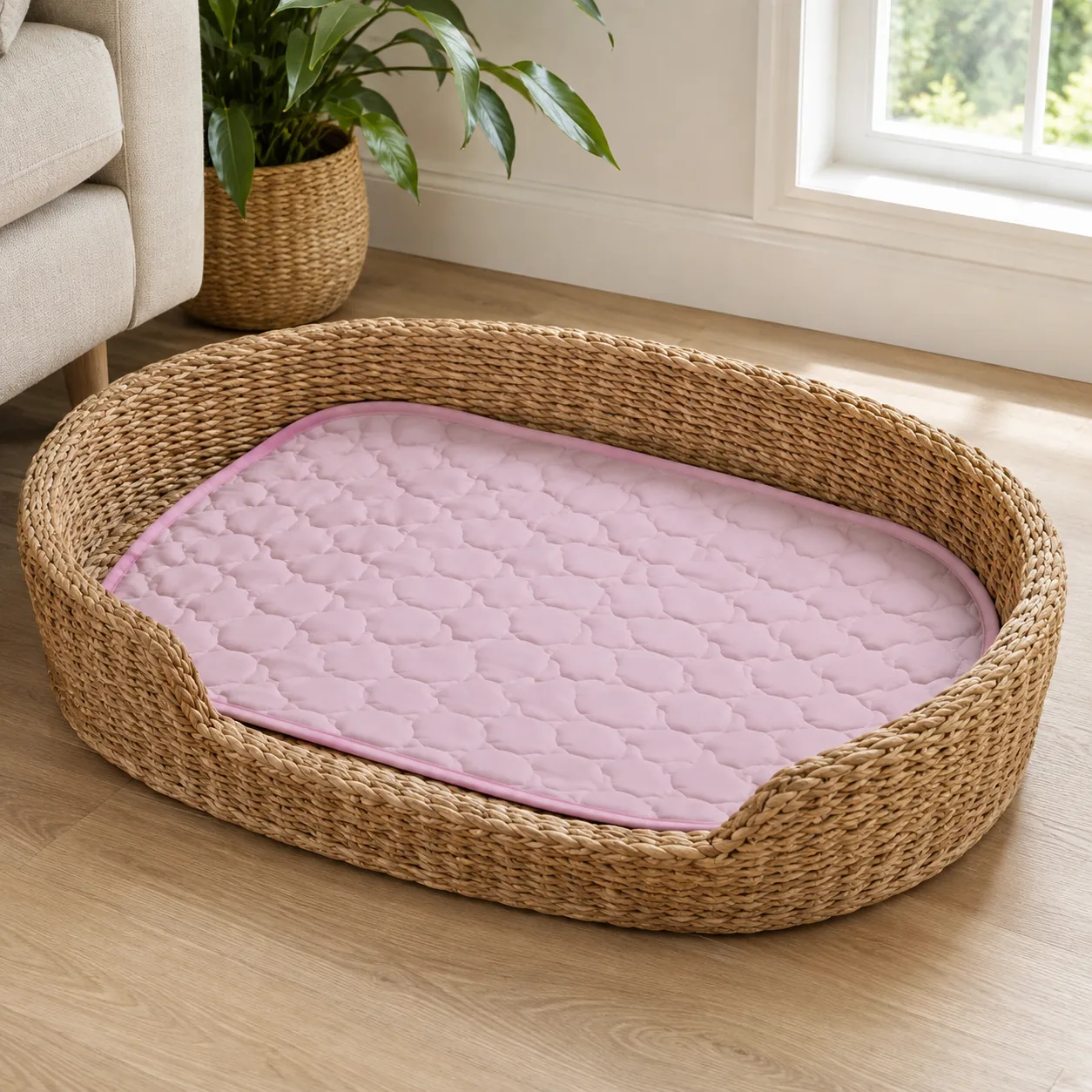
| Day one | Put it where they already sleep: in the bed, on their corner of the couch, on their rug. Do not call them over and do not lift them onto it | The place stays familiar and only the surface changes: the smallest possible change |
| First hours | If they are the cautious sort, leave a blanket they know on top, or a t-shirt of yours | The smell on it is already theirs, or yours |
| When they get on it | A calm voice, maybe a small treat, then leave them alone | The association forms on its own; too much fuss gets the dog back up |
| Day two | Take the blanket away, the mat stays where it is | The surface is part of the place by now |
| From day three | Move it where you need it: porch, trunk, rental at the coast | A mat they already know gets accepted anywhere, even in an unfamiliar room |
The three mistakes that drag it out
Lifting the animal onto it. The most instinctive move and the least effective: a dog set down on a surface it did not choose walks off as soon as you let go, and gives it a wide berth next time. The mat has to be won over, not imposed.
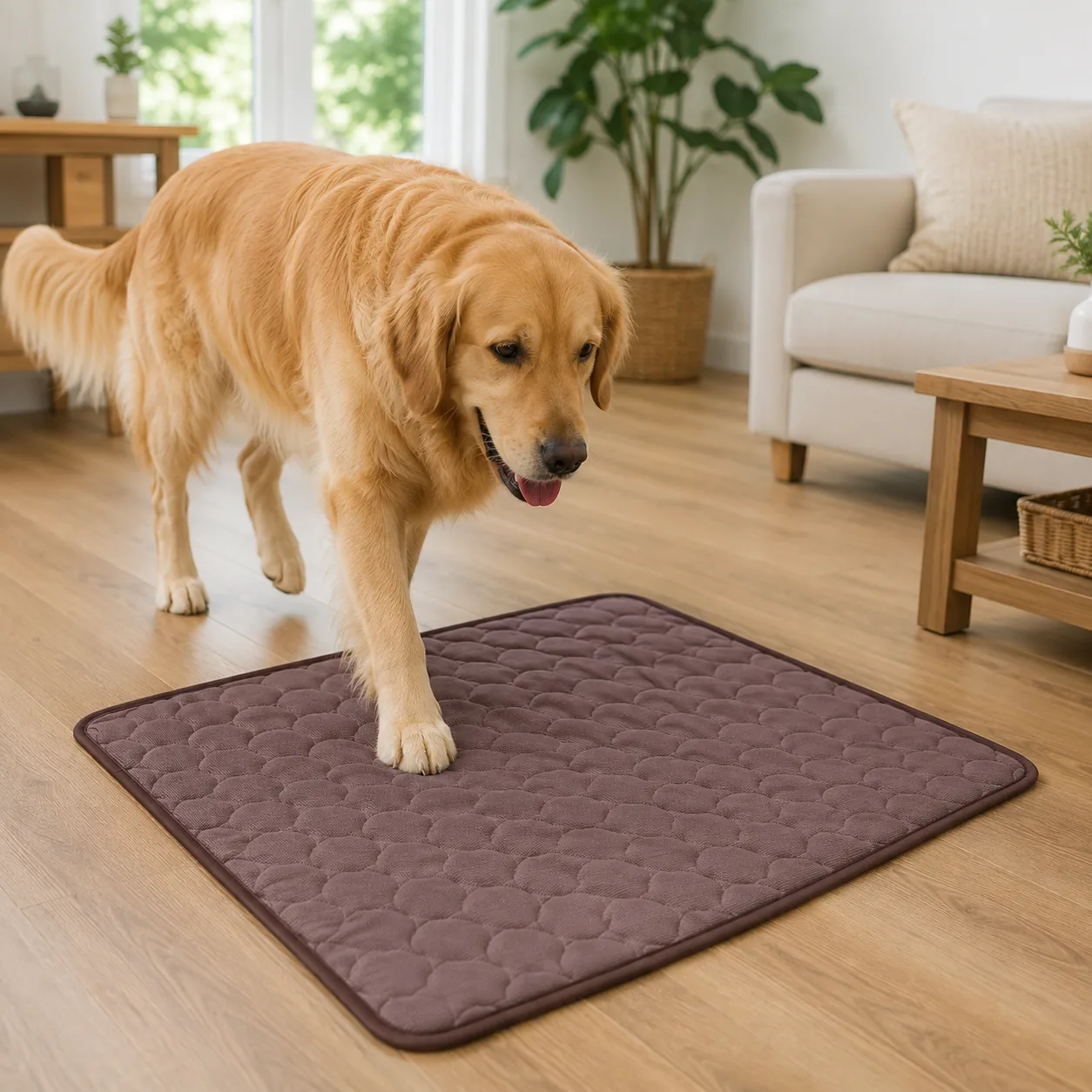
Picking a new spot for it. A mat in the middle of the hallway, where they have never slept, stacks two new things: the surface and the place. In their usual corner, only one is left.
Trying it on a cool day. At 70 °F indoors your pet is not looking for a cool surface, and has no reason to prefer it to the couch. The first attempt lands well on a hot day, when they are already looking for one themselves.
With a cat it works a little differently
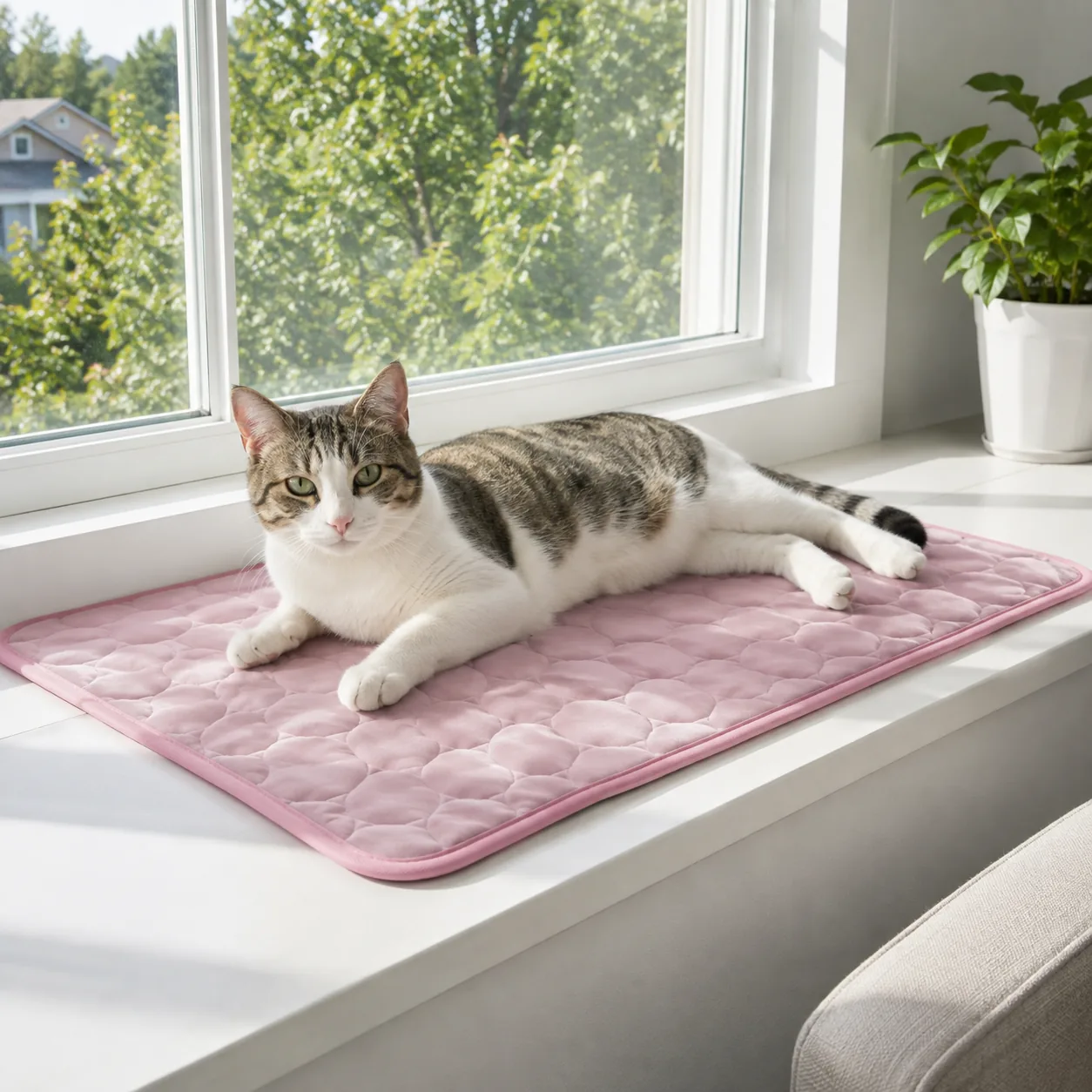
A cat is not persuaded, a cat decides. If she sees you waiting for her to get on, she will generally wait too. Most cats try the mat when nobody in the house is watching, and you find out from the hair left on it.
Two things shorten it. The first is the place: cats have fixed spots, the windowsill, the arm of the couch, the corner of the hallway where the air moves. The mat goes there, not in the middle of the room. The second is smell: a blanket she knows, left on top for the first day, is worth more than any amount of calling.
And the general rule for cats in summer applies: they regulate temperature by choosing where to lie down, not by panting. The rest is on the page about the cat cooling mat.
How an animal behaves once it has adopted it
They will not stay on it all day, and they should not. A dog that is hot alternates: lies on the cool surface for as long as it helps, moves off, then comes back. It is exactly how they use the bathroom tile, and it is the sign that it is working.
On genuinely hot days you find them there in the morning, the surface gets vacated in the afternoon and taken again in the evening. On cool days they may ignore it entirely, and that is fine: they are regulating their temperature, not using an accessory.
How long a cool surface holds, with the measured figures, is on the page about how long a cooling mat lasts.
If your pet is the cautious type
Some animals study anything new for days, and it has nothing to do with the mat: the same happens with a new carrier or a rug you just bought. With them what works is patience applied to the right spot: mat in the bed, blanket on top, nothing asked, and a hot day.
You have 30 days either way, with 30-day returns, so there is time for the introduction to happen without rushing. The terms are on the returns policy page.
Frequently asked questions
How long does it take a dog to get used to a cooling mat?
Most dogs lie down on it within a few hours, often the same day. The more cautious ones get there in two or three days. What shortens it most is not time, it is placement: a mat put where the dog already sleeps is adopted far sooner than one put in a new corner of the house.
My cat avoids it. What now?
With cats there is one rule: you do not convince a cat, you wait for it to decide. Put the mat where it already lies down, without calling it over and without placing it on top. For the first few hours leave a blanket it knows on the mat, so the smell it picks up is its own. Almost every cat goes on it by itself, usually when nobody is home to watch.
Can I put the mat inside the bed or crate?
Yes, and it is the fastest way to get it accepted: the place stays the same, only the surface changes. The same goes for the couch, the carrier and the spot in the car. The mat lies flat and does not slide.
My dog gets up after a few minutes. Is that normal?
Yes, and it is exactly how an animal regulating its temperature behaves. A hot dog alternates: it lies on the cool surface as long as it needs, moves off, comes back. That is not a rejection of the mat, it is precisely how it uses any cool spot in the house, tile included.
Should I wash it before first use?
Not necessary. If you prefer, a damp cloth over the surface and a few hours in the air take off the packaging smell, which is the first thing animals notice. A cold gentle machine wash stays possible at any point.
In the place they already sleep
Four sizes, goes in the bed or on the couch. 30-day returns within 30 days.
Free shipping to 18 countries · 30-day returns · We reply within 24 hours